
Robert Stockman / Windsor Locks, CT
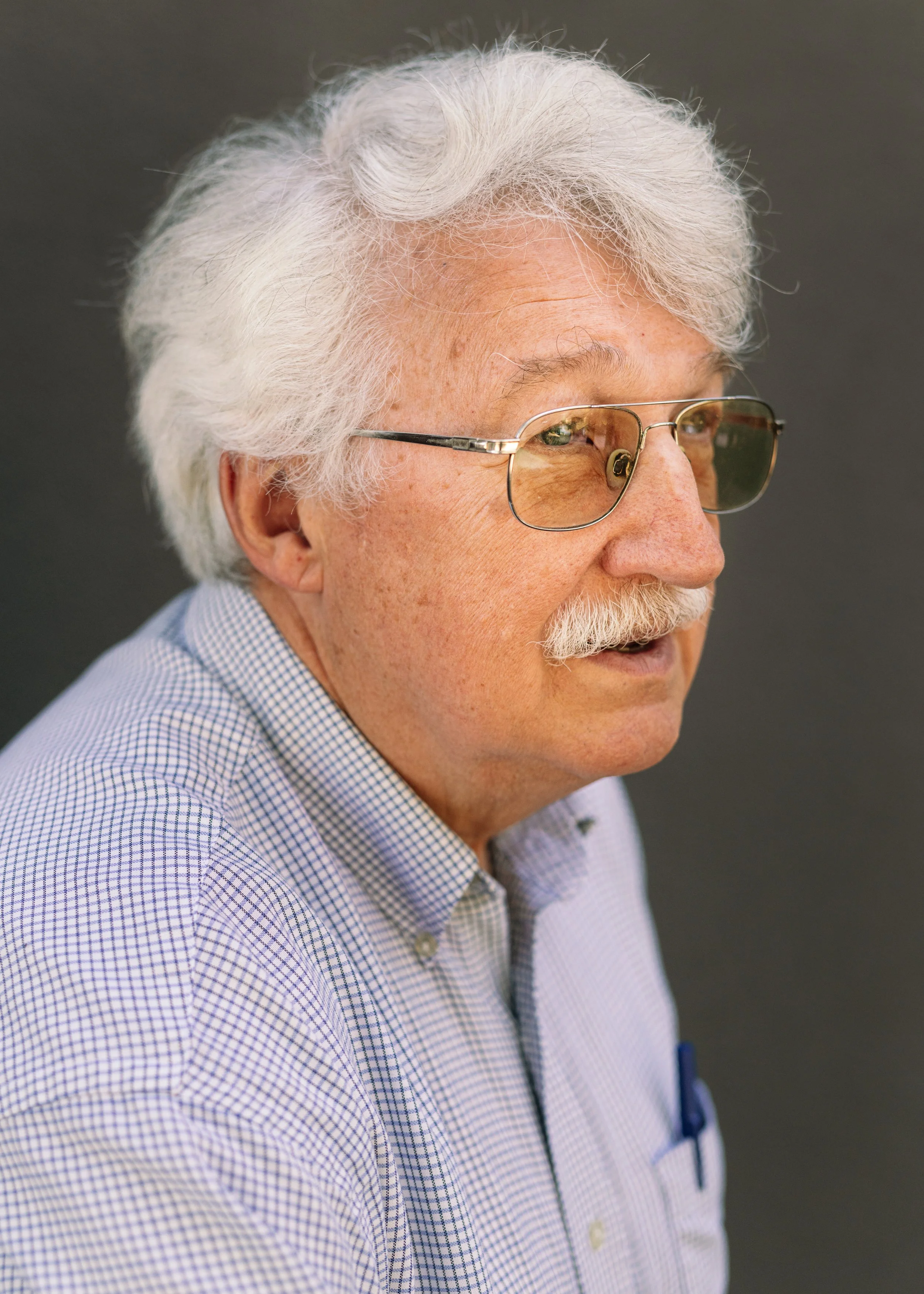
When I became a Bahá’í, it was almost a surprise to me, I guess you could say, because it wasn’t something I was looking for or expecting.
I often called myself a Star Trek Bahá’í because Star Trek had helped shape my values of inclusion, diversity, internationalism, and that sort of thing.
The Bahá’í teachings about world unity, the need for a world government to coordinate the affairs of all people around the world, the equality of men and women, and the harmony of science and religion were really valuable to me as a person majoring in geology.
They made sense to me. Loyalty to your country is secondary to your loyalty to humanity. These were teachings that, in some ways, I had already picked up, but not the praying part.
I wasn’t a mystical person, and that was difficult for me.
-
When you were 21 and met your friends who were Bahá’í and were introduced to the faith, had you been looking for a spiritual life or commitment?
Not really. I was majoring in geology. I viewed myself as a scientist. I was planning to become a professor of geology at a university. I had never prayed in my life. I didn’t really think much about religion.
My friend Lucy, who was part of a group of about eight to ten of us, was someone I had met during the first week of freshman year. We latched onto each other, and we remain friends all the way up to now.
Anyway, Lucy, at that time, was a devout Catholic, and she invited me to come to Mass.
Father Charlie, who was a Jesuit, was a great guy, youngish, maybe 35 or something.
He had a Mass every Sunday, and then he had a folk Mass at his house on Wednesday nights. Even my friend Scott, who was Jewish, and I would go. It was a nice break. It was half an hour long, and we enjoyed it. We enjoyed Father Charlie’s Mass.
After I became a Bahá’í, I stopped taking Communion. He kept handing it to me, and I kept passing it on. He always apologized.
And, of course, it was a folk Mass with someone playing the guitar. Everybody sat in a circle and broke the bread off for the next person. It was very nice. They passed the cup of wine around.
It was very, very nice, very moving, really, but it never occurred to me that I could become a Catholic. It never crossed my mind. That wasn’t in my constellation of thinking.
When I became a Bahá’í, it was almost a surprise to me, I guess you could say, because it wasn’t something I was looking for or expecting.
I often called myself a Star Trek Bahá’í because Star Trek had helped shape my values of inclusion, diversity, internationalism, and that sort of thing.
The Bahá’í teachings about world unity, the need for a world government to coordinate the affairs of all people around the world, the equality of men and women, and the harmony of science and religion were really valuable to me as a person majoring in geology.
They made sense to me. Loyalty to your country is secondary to your loyalty to humanity. These were teachings that, in some ways, I had already picked up, but not the praying part.
I wasn’t a mystical person, and that was difficult for me. But one of the Bahá’ís, Peter, who was the real mystic among us, kept emphasizing the importance of it. I sort of learned from Peter that way.
I often call him my spiritual uncle, not my spiritual father. John was the guy who taught me the faith, but Peter was my spiritual uncle, the one who really pushed me about these things. He’s now our retired financial advisor.
The thing that really helped me understand the spiritual side of the faith, though, was working on the biography of Thornton Chase, the first American Bahá’í.
Thornton Chase was a real mystic, and I found that side of his personal letters puzzling. At first, it wasn’t important to me. I’d read his letters. He would say, “I’m going to Cincinnati tonight,” and then he would talk about the fireside he was going to give or the topic he was going to talk about. That wasn’t particularly interesting to me.
I wanted to know whether there were ten people there or twenty people there. How big was the community? Who was doing what in Cincinnati?
So I would read his letters for their sociological content. But later, I realized I had to pay more attention to the mystical content, too, and that really helped me think about that side of the faith.
That was, of course, ten years later. I became a Bahá’í in 1973, and I finished the biography in 1986. I started working on it in 1980.
Going back to what you said earlier, you weren’t particularly brought up religiously, and you weren’t that interested in religion. Since you became a Bahá’í, have you become more interested? How has your view of other religions changed or evolved?
I never had bad feelings about other religions. I just didn’t pay close attention to them, I guess you could say.
I don’t know if I told this story or not, but I did go to church Sunday school once when I was about ten or eleven. My father later told me that I had asked to go. I had no recollection of asking.
The teacher in the Sunday school class was talking about Jonah being swallowed by the whale, and I was skeptical about that. That’s all I remember about that particular class.
It may very well have been that he was giving it as a metaphorical example and not claiming it to be literally true. But when you’re eleven, you tend to think pretty literally, so that stuck out in my mind.
I really hadn’t thought much about other religions. But as a Bahá’í, I recognize that all the major religions in the world are founded by Messengers of God.
In that sense, for Christians, Judaism is the Old Testament. For Bahá’ís, in a sense, all those religions are the Old Testament. We don’t necessarily follow all the teachings in those faiths because they’ve been superseded. Bahá’u’lláh has superseded many of them.
Bahá’u’lláh has given laws concerning divorce, and whatever the other religions had regarding divorce was for men and women at that time and place.
The thing that’s important for us is that all the religions in the world have brought comfort, relief, spiritual direction, guidance, and hope to human beings all the way back to the beginning of time.
They’ve given people a path to be good people, to live well, and to build strong communities.
You can’t build strong communities if people don’t trust each other. You can’t build strong communities if people are stealing from each other.
You build strong communities when people love each other, trust each other, and are honest, trustworthy, compassionate, and fair.
These are the spiritual qualities that we all have, that we’re endowed with, and that we have to develop in this world.
These are the qualities that we take to the next world. We can’t take a 401(k) with us. We can’t take our old prayer book with us. We take our spiritual qualities with us, and we continue to develop them forever.
All our religions have provided that.
In that sense, I am interested in other religions. I respect them, and I’m curious about them.
One final question I had is whether a spiritual or religious practice, I’ll use those words interchangeably, is better than not having a practice.
It depends on what you mean by better, I think. It has a lot to do with what the person needs. Personally I think that human beings need each other and that it’s part of the human condition to form communities. It’s part of our psyche to be in a community. Some people are more loners than others, and some people need community more than others, but overall, it’s part of who we are.
I think we need community, and I think spiritual community is an important part of that.
For me, in some ways, it’s less important. I’m not a highly mystical person, and I’m very autonomous as a person. But I still think it’s important, and I sometimes have to force myself to do it because I think it’s better.
So I think some kind of spiritual practice within a community is important for people to engage in, even if they don’t want to do it themselves. They should try, at least a little.
That tends to mean religion and not just personal spirituality because personal spirituality can be very autonomous and idiosyncratic.
If it’s in a community, there are some limits. It’s like a marriage that way. People rub each other’s rough edges off in a marriage, hopefully not too unpleasantly.
That’s my position, I guess.
I think you could say that’s the Bahá’í position: God has always brought Messengers to teach us things.
Bahá’u’lláh says the first duty imposed on all of us is to accept the Messenger and obey the Messenger. Not that we can ever completely obey him, or even completely accept him, perhaps, but that’s our obligation as human beings.
It’s part of our eternal covenant with God.