
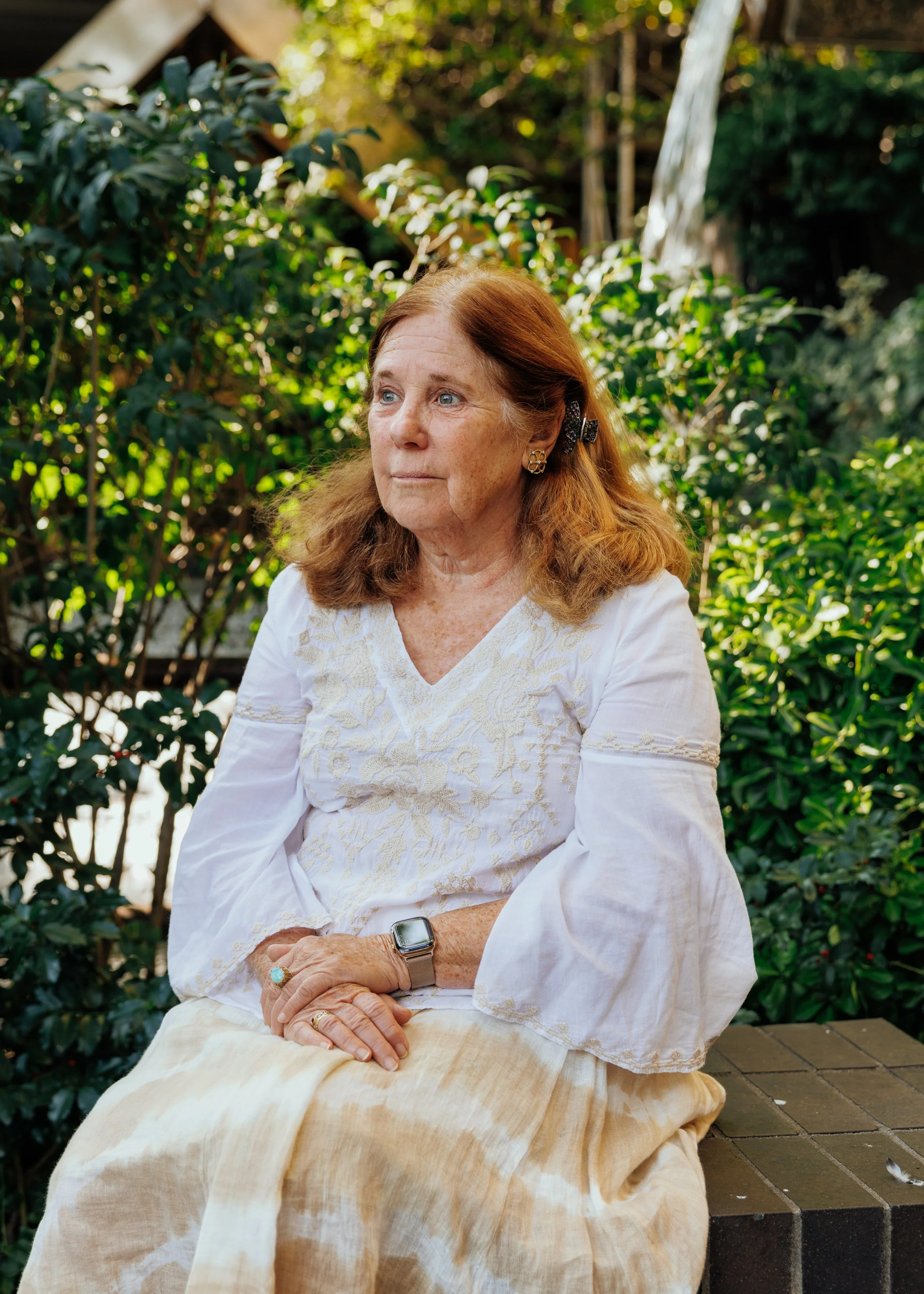
“Someone gave me the autobiography of a yogi and it was the first real serious explanation that made total sense to me of life and the universe. He talked about it as a scientific path. If you want to know what the purpose of your life is. Here are ways to calm your mind and internalize your attention and your energy and many things will unveil before you. And so I was very eager to pursue a path of meditation, which was not as mainstream as it is today. I became a vegetarian and I began to read a lot of various religious traditions, but I started meditating when I was about 20.
A lot of my friends were going off to India and it was, in my mind, kind of superficial excitement around it. I was seriously pursuing a path of meditation which stayed with me for 20 years.
And that sort of spiritual practice does change you, if you're persistent and regular, it changes your outlook. It changes the way you look at things. I always say that meditation is half the battle, the other half is how you react in the outside world. In other words, if you meditate and you come out and you get angry at somebody, how is your meditation? What has it really done for you? So that's half the battle. The other battle is how you carry it into everyday life looking at your reactions. What triggers you? Looking at why you get triggered. And that's really important now, because there's so much anger and fear on the planet, that unless you can go inside and say okay, ‘why is this triggering anger?’ You just become part of that way of contributing to the darkness that's now clouding human society.
Do you label your own beliefs?
I've sort of outgrown labels. I am part of the yogic tradition, the Vedic yogic tradition. My worldview is most similar to that of the Hindu worldview. I don't differentiate much between the Buddhist and Hindu. I think that there are shades of difference in the way they find expression, but essentially I think that it's just part of the same family. Just like the Abrahamic family has a lot of commonality. So that's that's the family that I sort of belong to but it's an ongoing journey. As long as you continue with your practices you're continuing to evolve. There's no end points.”
Dena Merriam / New York City